Living with Multiple Sclerosis is an immensely complex journey, and if you are reading this, you have likely dedicated significant time to understanding your condition. You also know the limitations of the current standard of care.
Traditional interventions—from Disease-Modifying Therapies (DMTs) to autologous Hematopoietic Stem Cell Transplantation (aHSCT)—focus heavily on a single objective: suppressing your adaptive immune system to stop it from attacking myelin. While this can manage acute relapses, it often leaves you immunocompromised, vulnerable to infections, and reliant on destructive biochemicals. More importantly, it fails to address the physical consequences of the disease: the restricted blood flow to your brain, the exhaustion of your neural cells, and the hardening of older brain lesions.
At Somata Genesis, we do not just manage symptoms or suppress your immune system. We look at MS through a multidisciplinary lens, targeting the vascular starvation, neural degeneration, and structural degradation that drive your disease progression.
Here is an in-depth look at the science, the biologics, and the exact roadmap of the Somata Genesis NCT Protocol.
Understanding Your MS: The Somata Genesis Paradigm
To effectively treat MS, we must address the three interconnected layers of the disease:
Vascular Starvation & Blood Flow Restrictions
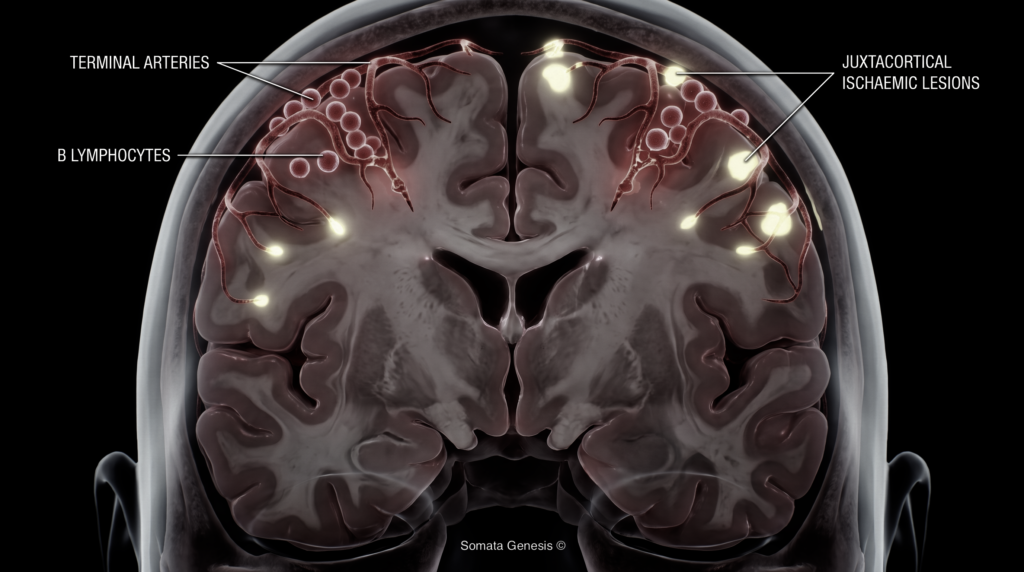
Autoimmune activity doesn’t just target myelin; it targets the endothelial cells lining your blood vessels. This causes thrombosis (clotting) and strictures in your venous sinuses. This hemodynamic bottleneck restricts the flow of oxygenated blood to your brain and causes intracranial pressure to build, resulting in vertigo, tinnitus, and severe pressure headaches.
The “Brain Fog” Mechanism (GABA Excitotoxicity)
When your brain is starved of oxygen, it enters a protective, channelized energy-conservation mode. To prevent your neurons from overworking and dying (excitotoxicity), your brain releases inhibitory chemicals like GABA. This deliberate neurosuppression is the true driver of the profound cognitive fatigue, short-term memory loss, and “brain fog” you experience.
Lesion Transformation (Smoldering MS)
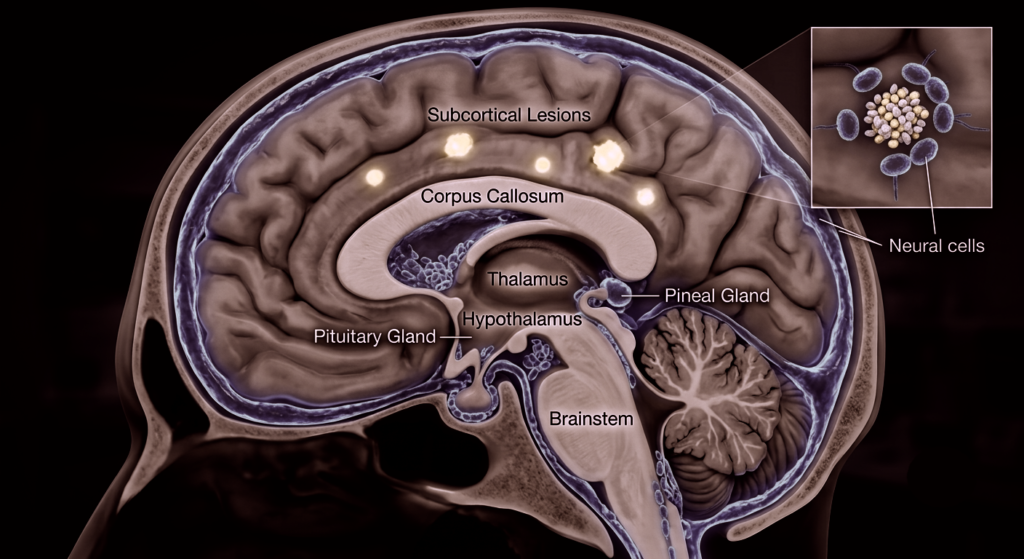
When active inflammation settles, adult brains (which naturally lack high levels of neurotrophic growth factors) struggle to regenerate. Over time, active MS lesions transition into hardened, dead fibrotic scars known as paramagnetic rim lesions (PRLs). These fibrous placeholders are a primary driver of Progression Independent of Relapse Activity (PIRA).
Our Biologics: The Zero Cryopreservation Standard
The success of regenerative medicine relies entirely on the vitality of the cells being introduced. The Somata Genesis manufacturing standard strictly prohibits freezing (cryopreservation).
Why We Never Freeze Cells
Thawing frozen cells requires the use of dimethyl sulfoxide (DMSO), a chemical that is toxic to the central nervous system. Furthermore, freezing and thawing inherently destroys 20% to 30% of the cellular batch. Injecting this dead cellular debris introduces a massive protein bioload into your body, which can trigger the very immune cascades and inflammation we are trying to stop.
The 4-Hour Window
Your cellular formulations are meticulously cultivated in our GMP-grade facility, sorted for extreme precision (FACS), and administered within four hours of leaving the incubator. They are living, fresh, and formulated specifically for the pH and osmotic environment of your cerebrospinal fluid and blood.
Rigorous Donor Screening
To prevent unexpected synthetic protein synthesis or immune triggers, we strictly utilize cells from donors who are whole-virus vaccinated or completely unvaccinated. Individuals who have received mRNA or viral vector vaccines are strictly excluded from our donor pool.
The Three-Phase Treatment Protocol
The NCT Protocol is a minimally invasive, multi-modal intervention designed to restore circulation before introducing regenerative cells.
Phase 1: Cerebrovascular Preconditioning Protocol
Restoring Oxygen and Relieving Pressure
Conducted by a neurovascular surgeon under local anesthesia (via a femoral vein catheter), this procedure avoids the stroke risks associated with arterial catheterization.
Watch how the cerebrovascular protocol is rendered
Endothelial Resurfacing
We navigate to the stenosed (narrowed) internal jugular and azygos veins and gently expand them using balloon venoplasty. Crucially, we do not just stretch the vein; we immediately introduce fresh endothelial cells to the site. These cells adhere to the expanded vessel wall, regenerating a healthy inner lining and actively preventing the vein from collapsing or re-narrowing.
Systemic Rejuvenation
We deliver a massive 7x high-dose formulation of arterial endothelial and mesenchymal stromal cells (MSCs) directly into your right atrium. This allows your aorta to naturally distribute the cells to your brain and peripheral organs, promoting widespread microvascular repair and naturally downregulating autoimmune inflammation.
Phase 2: The Neurogenesis Protocol
Stimulating True Neural Repair
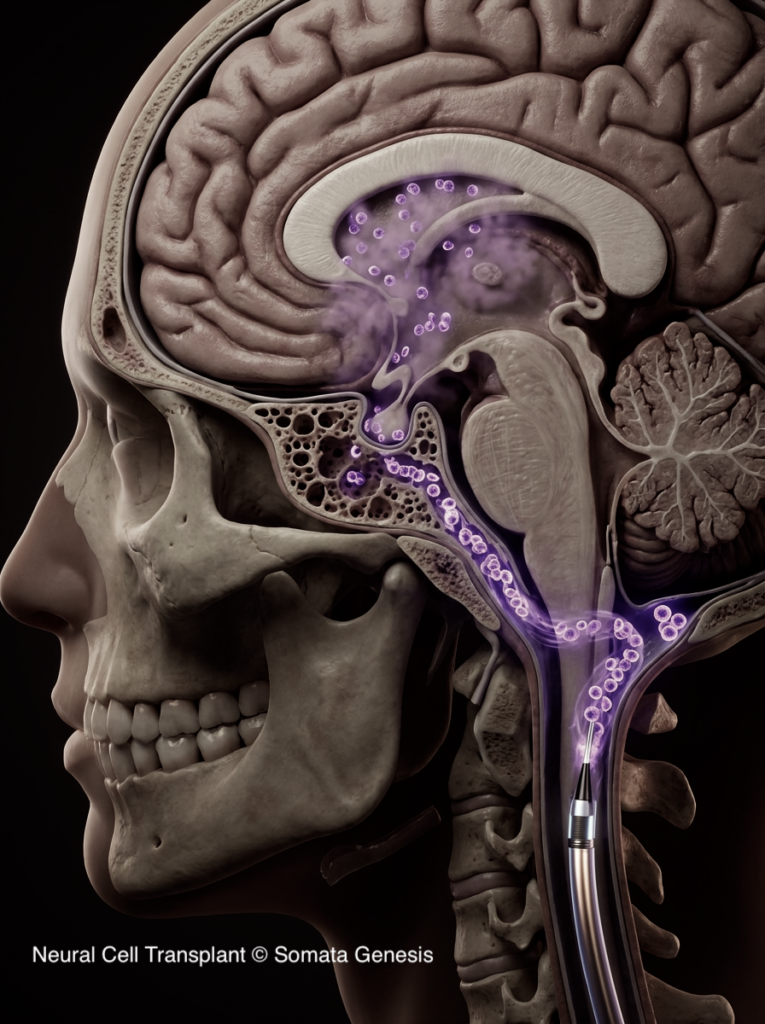
Once oxygenated blood flow is restored, an anesthesiologist conducts a lumbar puncture (intrathecal administration) to introduce our specialized Neural Formulation into your cerebrospinal fluid (CSF).
Watch how the Neurogenesis Protocol is rendered
Targeted Regeneration
Fresh neural stem cells, precisely balanced progenitor cells, and neurotrophic growth factors travel up your spinal column to your brain. They actively seek out paracrine (distress) signals from inflamed neurons to begin the repair process.
Total Comfort & Safety
We utilize anaerobic culture techniques and a proprietary aspiration protocol. Post-procedure, you are placed in a mandatory 12-hour head-low position (bed tilted from the top). This strict protocol guarantees the prevention of CSF leaks and debilitating post-dural puncture headaches.
Phase 3: Orthopedic Realignment (Conditional Extension)
Resolving Mechanical Pain
For chronic patients (EDSS > 5), postural lifestyle changes often lead to intervertebral disc compressions and pinched nerves (radiculopathy). Because this mechanical pain is frequently misdiagnosed as MS progression, our orthopedic surgeons use targeted connective tissue injections to regenerate disc cartilage, relieving the structural pain that neurology alone cannot fix.
Watch how the Musculoskeletal protocol is rendered
Expectations: What Can You Achieve?
We pride ourselves on absolute clinical transparency. Your baseline Expanded Disability Status Scale (EDSS) score heavily influences your expected outcome:
The “Golden” Window (EDSS 1.0 to 4.5)
If you fall within this cohort and do not have severe immunosuppressive drug dependencies, you are in the optimal window. Our primary goal is the achievement of NEDA (No Evidence of Disease Activity) on your MRI. Beyond halting the disease, you possess the highest potential for profound symptomatic reversal, electrochemical rebalancing, and the lifting of cognitive fatigue.
The Advanced Window (EDSS > 4.5)
If you are managing advanced structural and fibrotic challenges, our primary, dedicated objective is to stabilize your condition, halt further progression, and lock in NEDA. While symptomatic reversal of motor and sensory function is entirely possible and celebrated, we counsel patients in this cohort to view symptom reversal as a secondary bonus to disease stabilization.
Featured in this video is Mee Len, an MS patient who received the treatment at EDSS 2.5. Mee Len achieved EDSS 0 within a year post-treatment, with clinically proven remission and no subsequent use of DMT. 2 years after treatment, Mee Len is seen skiing with confidence. Her treatment outcomes demonstrate the efficacy of timely treatment and successful sustainability of her NEDA status.
Your Commitment to the Aftercare
This protocol is a partnership. To ensure the survival and integration of your fresh cellular biologics, you must adhere to a strict post-therapeutic regimen:
Medication Washouts: Chronic exposure to central nervous system depressants (SSRIs, Benzodiazepines) and spasticity blockers (Gabapentinoids) severely obstructs natural neurotransmission and limits the neuroplasticity required for healing. We will work with you to manage these safely.
Vaccine Limitations: You must maintain a 6-month pre-therapy and 1-year post-therapy gap from any mRNA or viral vector vaccines due to their high propensity to induce pro-inflammatory cytokine storms.
Dietary Precision: You must maintain an anti-inflammatory diet free of allergens and excessive sugars, prioritizing a minimum of 50g of protein daily, high fiber, Vitamin B, and probiotics.
Vitamin D Restriction: While popular in the MS community, excessive Vitamin D supplementation is strictly prohibited post-treatment, as it can cause calcification of your blood vessels and heart valves, exacerbating ischemic brain damage.
Mandatory Rehabilitation: You must commit to daily standardized physiotherapy (minimum 15 minutes of active movement exercises). Physical movement is the trigger that forces your brain to release the chemical signals required to guide your new neural cells to the areas that need them most.